
Surviving the School Holidays
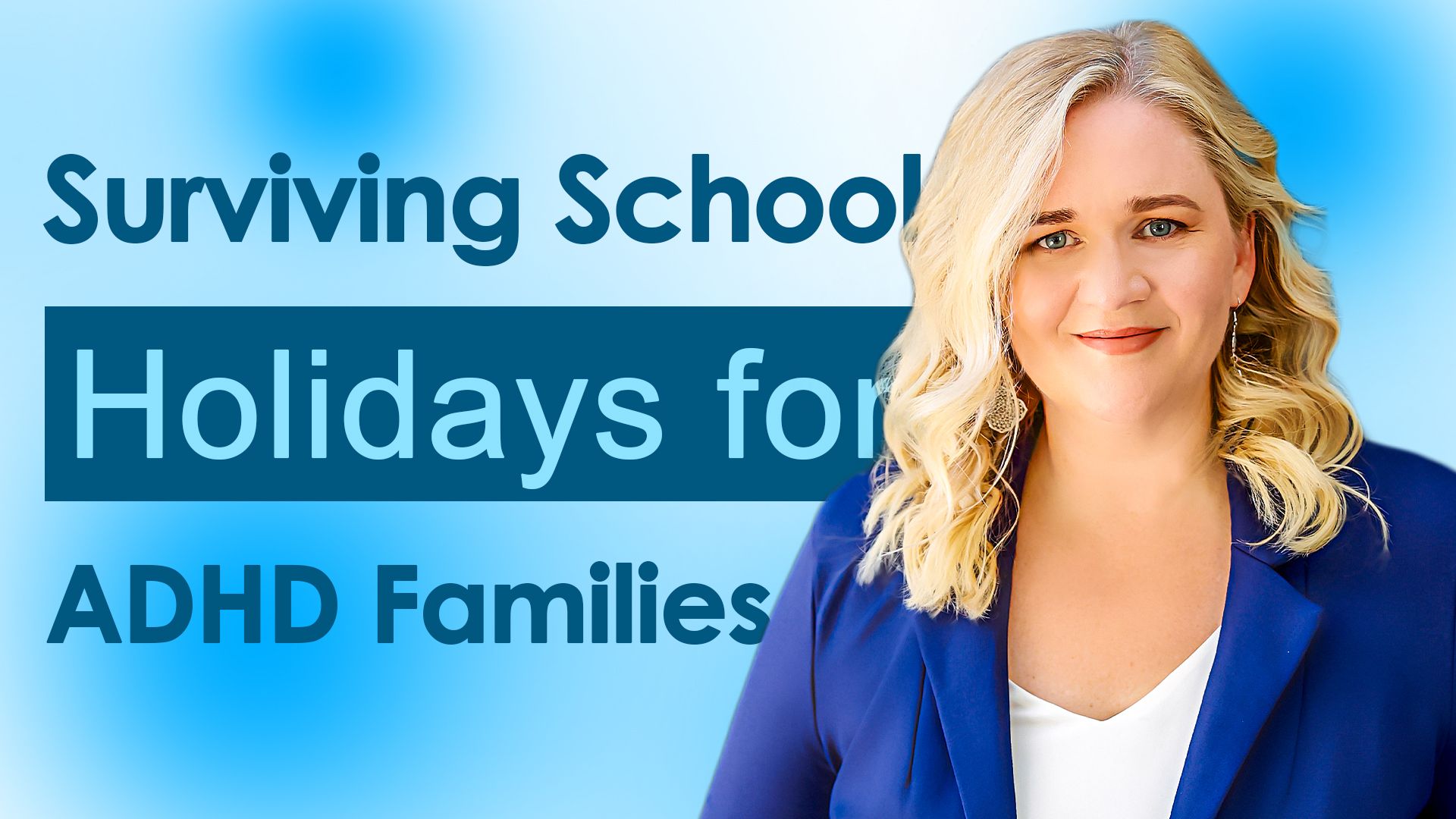
School holidays are here. And if you’re anything like the families I work with, you probably fall into one of two camps.
There’s the “love it” camp. No lunchboxes. Lower expectations. Less pressure.
And then there’s the “oh no” camp. More mess. More noise. More juggling. More everything.
But here’s the thing I think both groups have in common.
We all imagine the holidays will feel one way… and then reality hits.
This episode is about surviving the school holidays without burning yourself out. Not thriving. Not doing it perfectly. Just staying resourced enough to get through.
Because for ADHD families, school holidays are not a break.
They’re a structural shift.
School Holidays Aren’t Easier. They’re Different.
Every year, I picture school holidays as this slower, more connected time. Family outings. Quality time. A gentler pace.
And every year, the reality looks more like bored kids, dysregulation, arguments on the lounge, way too much washing, extra food, extra noise, and me trying to work through it all while questioning screen time choices.
When you have ADHD in the house, holidays don’t reduce demand. They shift it.
Structure drops.
Demands on the parent rise.
Expectations stay the same.
You still have to feed everyone, keep them safe, manage emotions, plan activities, and regulate yourself through it all.
That’s why the goal here isn’t to thrive. It’s to protect your nervous system enough to make it through.
Strategy 1: Start With Your Capacity, Not the Plan
Before you even make breakfast, check in with you.
Ask yourself:
- How’s my energy today?
- How’s my patience?
- How’s my sensory tolerance?
- How’s my mental load?
This doesn’t need journalling or spreadsheets. A 30 second internal scan is enough.
Because the biggest mistake we make is planning every day like it’s a high-capacity day. No one can sustain that.
Some days are low-key days.
Some days are medium days.
High-capacity days are rare.
When we ignore capacity, we become reactive. When we match demand to reality, everything feels lighter.
Strategy 2: Ditch the Full Schedule. Build Anchors Instead.
School holidays have a way of making us want to cram everything in.
Instead of filling your calendar, focus on anchors.
ADHD brains don’t need rigid routines. They need predictability points.
Think:
- A morning anchor
- A midday or afternoon anchor
- An evening anchor
Breakfast and a kick of the footy outside.
A shared lunch moment.
A predictable wind-down routine.
These anchors are not pressure. They’re support.
Everything else can stay flexible.
Strategy 3: Transitions Matter More Than You Think
A lot of holiday meltdowns aren’t behaviour problems. They’re transition injuries.
At school, kids move through a predictable structure all day. During holidays, that structure disappears, but transitions increase.
The ADHD brain needs more time to shift gears than feels logical.
Help by:
- Talking through the loose plan for the day in advance
- Giving longer warnings than you think they need
- Bringing lunch earlier (many kids eat around 11am at school)
Transitions go better when they’re expected, not sprung.
Strategy 4: Decode Behaviour With HALT
When things start going sideways, pause and check HALT.
Are they:
- Hungry?
- Angry or anxious?
- Lonely?
- Tired?
Most “behaviour” comes back to one of these.
Food rhythm, reassurance, connection, rest. Often the solution is simpler than it looks.
Strategy 5: When Things Go Sideways, Run a Reset
Meltdowns will happen. That’s part of long stretches at home.
When you catch dysregulation early, try this reset sequence:
- Pause. Check yourself first.
- HALT. What’s driving this?
- Change the environment. Even moving rooms helps.
- Add movement or sensory input.
- Reconnect briefly.
- Choose the next right step, not necessarily the original plan.
Talk less. Use minimal words. Regulation first. Everything else can wait.
Strategy 6: Protect the Adult Nervous System First
This is the big one.
When the primary caregiver regulates, the house regulates.
Your kids don’t need you to be perfect. They need you to be resourced enough.
Have a guilt-free regulation list ready for yourself. Put it in your phone. Because when you’re dysregulated, you won’t remember it.
Maybe it’s:
- Cancelling the rest of the day
- Screen time
- Stepping outside
- Sitting in the car by the ocean
- A cup of tea in the backyard
Choose the easiest option available. Sustainability beats perfection every time.
You Don’t Have to Do Holidays Like Anyone Else
Your family doesn’t need to look like anyone else’s.
Maybe your holidays mean less outings and more one-on-one time.
Maybe it means lowering demands.
Maybe it means working through.
Maybe it means doing very little at all.
That’s okay.
School holidays don’t need to be perfect. They just need to be sustainable.
If You Want Extra Support…
If you’d like more practical help, I’ve created a few free resources to support you:
- A free ADHD Family Coaching Week with daily guidance, live coaching, and actionable steps
- A decluttering checklist for ADHD-friendly homes
- A Start the Year Right checklist to create calmer rhythms across the year
These are designed to support real families, not ideal ones.
👉 You can find all of these at thefunctionalfamily.com
Watch & Listen
🎥 Watch the full episode on YouTube
🎧 Listen on the ADHD Families Podcast
Resources Mentioned
- Free ADHD Family Coaching Week
- Decluttering checklist
- “Start the Year Right” checklist
About Sharon Collon
Sharon Collon is an ADHD family coach and founder of The Functional Family. She’s a mum of three boys with ADHD and has supported over 40,000 families through coaching, programs, and her podcast. Sharon helps parents swap chaos for calm with practical strategies that actually work in real life.
🌏 www.thefunctionalfamily.com
📸 @thefunctionalfamily
Join our free ADHD support group
Your tribe is here waiting for you. Join us now.
Want support? Join our Free Community for families navigating ADHD
Recent Posts

Book a FREE 15 min discovery call with Sharon
Sharon is an award winning credentialed ADHD coach and parenting consultant who is specifically trained to work with families navigating ADHD. She is passionate about creating ADHD-friendly systems to make family life easier with ADHD. Find out how she can help you and/or your family.
🎥 Loved this post?
Catch the full conversation on YouTube!
We dive deeper into this topic in the latest podcast episode—real talk, practical tips, and plenty of “oh wow” moments.
Don’t forget to like & subscribe!
